In March, the College of Life Sciences of our University and the Hubei Provincial Key Laboratory for Conservation and Utilization of Characteristic Plant Germplasm Resources in the Wuling Mountains, in collaboration with the Guangxi Institute of Botany, Chinese Academy of Sciences in Guangxi Zhuang Autonomous Region, published a research paper in the international academic journal PhytoKeys, officially reporting a new species of the genus Primulina (Gesneriaceae) (Primulina acutiloba C.Xiong, J.X.Fu & F.Wen).
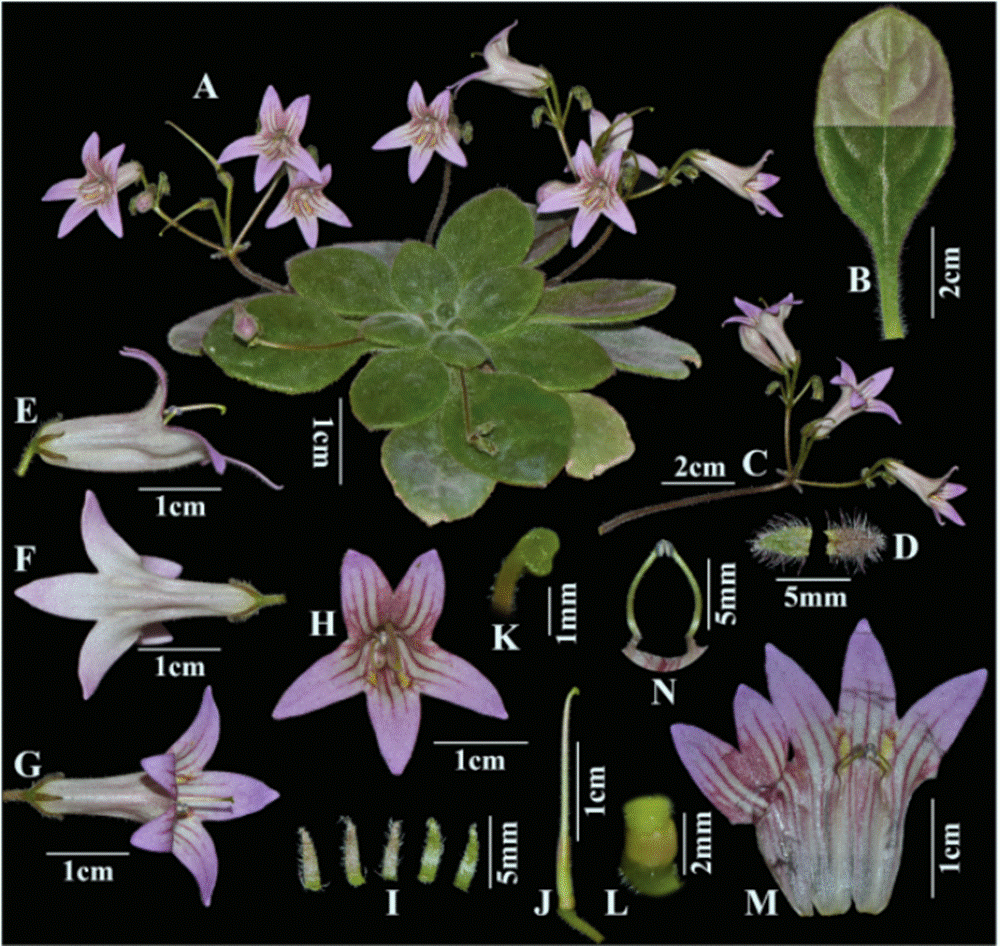
A Close-up of the Floral Parts of Primulina acutiloba. (Photo by Xiong Chi)
In December 2024, the research team discovered an unknown Gesneriaceae species on a limestone cliff in Tianyang District, Baise City, Guangxi. After introduction and cultivation, they successfully observed its pale purple flowers in August 2025. The corolla lobes are sharply triangular, and the throat has purple longitudinal stripes — a unique morphology that serves as a key diagnostic feature distinguishing it from related species. Through detailed morphological comparison with the related species Primulina pingguoensis and Primulina pseudopinnata, it was finally confirmed as a new species. Its specific epithet “acutiloba” means “sharp-lobed”, accurately summarizing the key feature. Primulina acutiloba is currently known only from a single limestone hill at its type locality, with only 60–80 mature individuals. Its habitat is disturbed by human activities. According to the International Union for Conservation of Nature (IUCN) Red List criteria, the species is classified as Endangered. The discovery of this new species enriches the diversity of Gesneriaceae plants in China and highlights the urgent need to protect narrowly endemic species in karst regions.
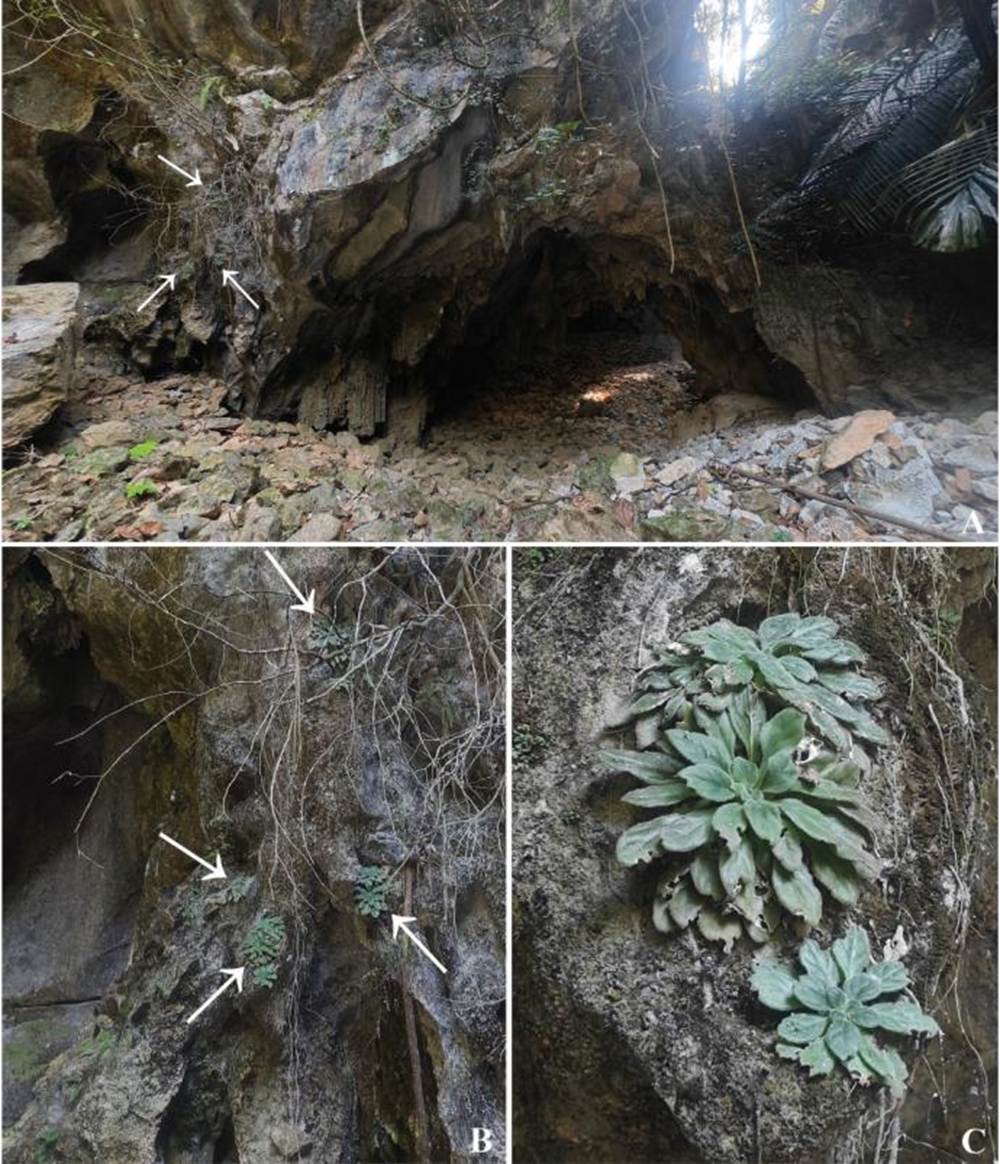
Habitat of Primulina acutiloba. (Photo by Xiong Chi) (Note: The plant grows on limestone cliffs, with succulent, rosette-shaped leaves, exhibiting a unique survival morphology in karst habitats.)
This research was supported by the National Natural Science Foundation of China, the Guangxi Natural Science Foundation, and the Academic Innovation Team Project of our university. The co-corresponding authors of the paper are Professor Liu Hong from the College of Life Sciences of our university and Researcher Wen Fang from the Guangxi Institute of Botany. The research team has already initiated ex situ conservation, and will subsequently promote in situ protection and long-term monitoring, providing scientific guarantees for the safe survival of this rare species.